
Cajón: The History and Evolution of the Peruvian Box Drum
The cajón (Spanish for "box, crate, or drawer") is a distinctive box-shaped percussion instrument that has evolved from a tool of survival and cultural resistance into a global musical staple. Classified as an idiophone—an instrument that creates sound primarily by the vibration of the instrument itself—the cajón is played by slapping the front or rear faces with the hands, fingers, or various implements.
While deeply rooted in the traditions of Peru, the cajón has transcended its origins to become a versatile tool for musicians in genres ranging from traditional flamenco to modern jazz and pop.
Key Facts
- Origin: Developed in coastal Peru during the period of slavery in the late 19th century.
- Classification: An idiophone (specifically a percussion vessel, Hornbostel–Sachs 111.24).
- Cultural Status: Declared National Heritage by Peru in 2001 and an "Instrument of Peru for the Americas" by the OAS in 2014.
- Construction: A wooden box with five thick sides and one thin striking surface called the tapa.
- Global Reach: Widely used in Afro-Peruvian music, Spanish flamenco, and contemporary acoustic settings.
Design and Construction
The structure of a cajón is deceptively simple. Most of the box is constructed from wood sheets ranging from 13 to 19 mm (1/2 to 3/4 inch) in thickness. The sixth side, which serves as the striking surface or head, is made of a thinner sheet of plywood known as the tapa. To allow the sound to project, a sound hole is cut into the back of the box.
Modern iterations of the instrument often include rubber feet for stability and adjustment screws at the top to fine-tune the percussive timbre. Some specialized versions, such as lap cajons, are smaller and designed to be played while resting on the musician's lap.
Origins and Cultural Evolution
The cajón emerged from the experiences of enslaved people of West and Central African origin in the Americas. Its development in coastal Peru is linked to two primary theories. The first suggests the instrument is a direct descendant of box-like instruments from the Antilles and Africa (particularly Angola), adapted using available Spanish shipping crates. Ethnomusicologist Susana Baca notes that these instruments often began as fruit crates used by port workers.
The second theory posits that enslaved people used boxes to subvert Spanish colonial bans on traditional African drumming, effectively disguising their musical instruments as ordinary furniture or crates.
By 1850, the instrument reached a peak in popularity. By the end of the 19th century, players began bending the body planks to alter sound vibration patterns. Following the end of slavery, the cajón spread to the Criollos (people of Spanish descent in Peru) and eventually became a powerful symbol of Peruvian blackness, particularly through the influence of the ensemble Perú Negro.
Global Expansion and Contemporary Use
The cajón's journey to Spain is largely attributed to the legendary flamenco guitarist Paco de Lucía. After encountering the instrument in Lima and being impressed by its rhythmic possibilities, he brought it to Spain. Along with percussionist Pepe Ébano, the cajón was integrated into flamenco, most notably in the piece "Entre dos aguas."
Today, the cajón is a staple in several musical contexts:
- Traditional Styles: Used extensively in Tondero, Zamacueca, Peruvian Waltz, and Cuban Rumba.
- Modern Genres: Frequently found in blues, pop, rock, funk, and jazz.
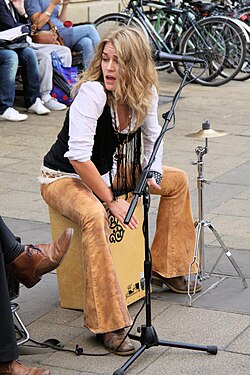
- Minimalist Setups: Often replaces a full drum kit in acoustic settings, serving as both a bass drum and a seat for the performer.
- Folk Music: It has gained popularity in Irish folk music, sometimes serving a similar role to the bodhrán (a traditional frame drum).
Playing Techniques
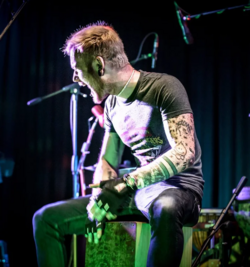
The standard playing position involves the musician sitting astride the box, tilting it slightly, and striking the tapa between their knees. While the hands and fingers are the primary tools, some percussionists use plastic or metal brushes. The "Pen Technique," developed by Patrizio Migliarini, uses metal brushes to achieve a dynamic richness similar to a full drum kit.
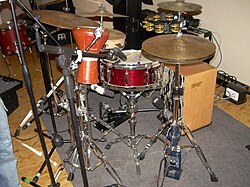
To expand the instrument's capabilities, some players attach a bass drum pedal, allowing them to play the cajón with their foot. This transforms it into an indirect percussion instrument, freeing the hands to play other instruments, though it changes the traditional sitting position. Because of the physical impact of hard hitting, some musicians wear protective drumming gloves to prevent blisters.
Summary of Cajón Characteristics
| Feature | Details |
|---|---|
| Classification | Idiophone / Percussion Vessel |
| Primary Material | Wood and Plywood (Tapa) |
| Key Regions | Peru, Spain, Cuba, Mexico |
| Common Genres | Afro-Peruvian, Flamenco, Jazz, Pop, Folk |
| Playing Methods | Hands, Brushes, Bass Drum Pedals |
Frequently Asked Questions
What is the "tapa" of a cajón?
The tapa is the thin sheet of plywood nailed to the front of the wooden box, serving as the primary striking surface that produces the instrument's sound.
How did the cajón get to Spain?
The instrument was introduced to Spanish flamenco by Paco de Lucía and Pepe Ébano after Paco de Lucía discovered the instrument during a visit to Peru.
Can the cajón be played with feet?
Yes, some percussionists attach a standard bass drum pedal to the cajón, allowing it to be played with a foot similar to a kick drum in a drum kit.
Why is the cajón significant to Afro-Peruvian culture?
It originated from enslaved people of African descent who adapted shipping crates into instruments, often to bypass colonial bans on music, eventually becoming a symbol of Peruvian blackness.
What is the difference between a standard cajón and a lap cajón?
A standard cajón is a full-sized box that the musician sits on, while a lap cajón is a smaller, more portable version designed to be played while resting on the musician's lap.