
Canteens: The Evolution of Portable Water Containers
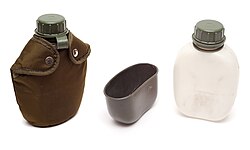
A canteen is a reusable drinking water bottle specifically engineered for individuals who spend extended periods in the field, including hikers, campers, soldiers, bush firefighters, and outdoor workers. Unlike standard water bottles, canteens are designed for durability and portability, typically featuring shoulder straps or belt attachments for easy transport.
To enhance functionality, many canteens are encased in a cloth bag with padding. This cover serves a dual purpose: it protects the bottle from impact and provides insulation. When the padding is soaked with water, it utilizes evaporative cooling—a process where the evaporation of water from the surface absorbs heat—to help keep the liquid inside the bottle cool.
Many modern and military-style canteens also feature a nested canteen cup, allowing the user to heat water or prepare food.
Key Facts
- Ancient Origins: Evidence suggests humans used ostrich eggshells as canteens as early as 60,000 years ago.
- Materials: Evolution has moved from organic materials (gourds, leather) to glass, metals, and modern plastics.
- Cooling Method: Wet cloth covers use evaporation to lower the temperature of the contents.
- Versatility: Single-walled metal canteens can be placed directly over fire for sterilization or cooking.
The History of Portable Hydration
Prehistoric and Primitive Designs
The need for portable water dates back to the Middle Stone Age. At the Diepkloof Rock Shelter in South Africa, ostrich eggshells from the Howiesons Poort period indicate that hunter-gatherers in the Kalahari punctured shells to create early water containers approximately 60,000 years ago.
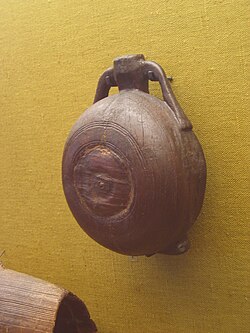
Other primitive societies utilized hollowed-out gourds, such as the calabash, or crafted durable bags from leather to carry water across arid landscapes.
From Glass to Metal
In later eras, canteens transitioned to glass bottles housed within woven basket covers and sealed with cork stoppers. However, glass was fragile and impractical for rugged use.
By the mid-1900s, metal became the standard material. Manufacturers used aluminum, stainless steel, or tin-plated steel. These designs introduced the screw cap, which was often attached to the bottle neck by a short chain or strap to prevent the cap from being lost. While more durable than glass, these metal bottles were prone to pinhole leaks if they were dented or struck against jagged rocks.
Contemporary Canteen Materials
Modern canteens are manufactured from a variety of high-performance materials, including polycarbonate, polyethylene, titanium, aluminum, and stainless steel. The choice of material often depends on the intended use:
- Double-walled metal: These provide vacuum insulation to keep contents hot or cold for extended periods.
- Single-walled metal: These are lighter and offer the unique advantage of being fire-safe, meaning they can be placed on a stove or open fire to sterilize water or brew hot drinks.
- Plastics: Polyethylene and polycarbonate offer lightweight, shatter-resistant alternatives for casual and professional use.
| Era/Type | Common Materials | Key Characteristics |
|---|---|---|
| Prehistoric | Ostrich eggshells, Gourds, Leather | Organic, primitive, lightweight |
| Traditional | Glass, Woven baskets, Cork | Fragile, required protective covers |
| Mid-20th Century | Tin-plated steel, Aluminum, Stainless steel | Screw caps, prone to pinhole leaks |
| Contemporary | Polycarbonate, Titanium, Double-walled steel | Insulated or fire-safe, highly durable |
Frequently Asked Questions
How does a canteen cover keep water cool?
When the cloth padding of a canteen cover is soaked with water, the process of evaporative cooling occurs. As the water evaporates from the fabric, it draws heat away from the bottle, helping to maintain a lower temperature for the contents.
Can all metal canteens be used over a fire?
No. Only single-walled metal canteens are generally suitable for use over an open fire or stove. Double-walled insulated canteens should not be used this way as the vacuum seal can be compromised.
What are the advantages of a screw cap over a cork?
Screw caps provide a more secure, leak-proof seal and are less likely to be lost or displaced, especially when secured to the bottle neck with a chain or strap.
How old is the earliest evidence of canteens?
Evidence from the Diepkloof Rock Shelter in South Africa suggests that humans used punctured ostrich eggshells as water containers as early as 60,000 years ago during the Middle Stone Age.