
Catholicism in Scotland: A History of Faith, Persecution, and Resilience
The history of Catholicism in Scotland is a narrative of endurance, stretching from the early influence of the Roman Empire to the complex social dynamics of the modern era. From the monastic foundations of the early saints to the clandestine "heather priests" of the Reformation, the faith has survived periods of intense persecution and systemic marginalization to remain a vital part of the Scottish cultural landscape.
The Establishment of Early Christianity
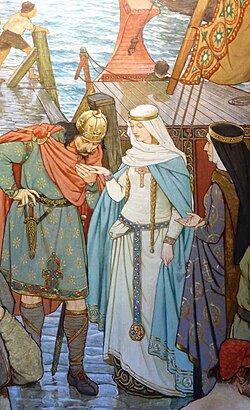
Christianity likely first reached Scotland via Roman Legion soldiers stationed in the northern reaches of Britannia. Even after the Roman garrisons withdrew in 383 AD under Magnus Maximus, the faith persisted among the Proto-Welsh-speaking kingdoms of the Hen Ogledd (the "Old North"). This survival is documented in early Welsh literature, including the Book of Taliesin, the Book of Aneirin, and accounts of Saint Mungo and St Ninian.
Between the fifth and seventh centuries, the evangelization of the Picts, Gaels, and Anglo-Saxons was driven largely by Irish missionaries. Key figures included Sts Columba and Baithéne, who founded Iona Abbey, as well as St Donnán of Eigg and St Máel Ruba, the founder of Applecross Abbey. These missionaries established monastic institutions that served as hubs for education, libraries, and regional ministry.
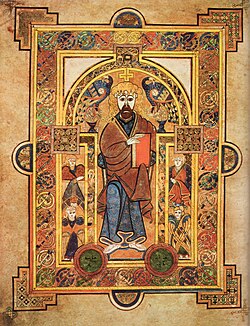
This era saw the emergence of the Celtic Church, characterized by distinct practices: a more relaxed approach to clerical celibacy, a unique monastic tonsure, the use of the Pater Noster cord (a precursor to the rosary), and a lunar method for calculating Easter. Unlike the Episcopal polity (governance by bishops) common elsewhere, the Celtic Church relied heavily on abbots. This structure suited the tribal nature of early Scottish society, as tribes were more likely to accept a local monastery than a bishop from a rival tribe.
The Scottish Reformation and Persecution
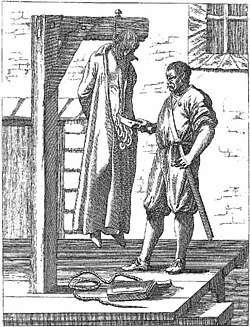
The Scottish Reformation brought a period of severe illegality for the Catholic Church. Many adherents were forced underground, though some members of the nobility continued to practice openly. One notable figure was John Ogilvie, a Jesuit priest who was hanged at Glasgow Cross on 10 March 1615 after refusing to take the Oath of Supremacy, which required acknowledging the King as the Supreme Head of the Church.
While Ogilvie is often cited as the primary martyr of this era, the broader Catholic population was served by "heather priests"—outlawed clergy who operated in secret. These priests were most active in the Gàidhealtachd (Gaelic-speaking areas) of the Hebrides, the Northwest Highlands, and the Northeast.
Resistance and Survival
The struggle for religious freedom often intersected with political rebellion. In 1630, Fr. Patrick Hegarty was rescued from priest hunters by Ranald MacDonald of Benbecula, an act that infuriated King Charles I. Later, many Catholics supported Jacobitism (the movement to restore the House of Stuart), hoping that a Stuart restoration would bring Catholic Emancipation and civil rights.
Decline and the Underground Church
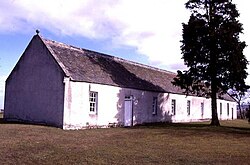
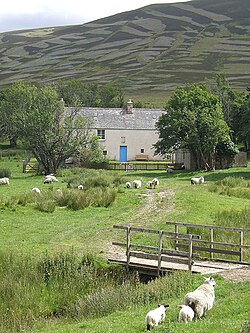
By the late 17th century, the Pope appointed Thomas Nicolson as the first Vicar Apostolic in 1694. The mission was eventually split into Highland and Lowland vicariates. In the Highlands, Bishop James Gordon established a minor seminary at Eilean Bàn in Loch Morar, which later moved to Scalan in Glenlivet. Scalan became a critical center for underground education, despite being burned down multiple times by government soldiers.
Following the Battle of Culloden, the government intensified its crackdown, ordering the demolition of Catholic chapels and the arrest of priests. This period of oppression, combined with the economic devastation of the Highland Clearances (the forced displacement of tenants by landlords), led to mass emigration. Between 1770 and 1810, thousands of Catholics left the Western Highlands for North America, often driven by a combination of poverty, rackrenting, and anti-Catholic sentiment.
Immigration and Sectarian Tensions
The 19th century saw a resurgence of the Catholic population due to large-scale migration from Ireland and the Highlands. In towns like Dumbarton, the Catholic community grew rapidly, leading to the construction of St Patrick's church in 1830. However, this growth often triggered violent sectarian riots, frequently incited by anti-Catholic polemicists like John Sayers Orr.
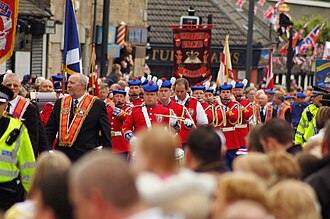
Sectarian violence peaked in the late 1920s and early 1930s, characterized by clashes between the Orange Order and Catholic communities, as well as conflicts between Glasgow "razor gangs." These tensions eventually began to wane in the 1940s, partly as the Church of Scotland recognized the dangers of state-sponsored religious purity after witnessing the atrocities of Nazi Germany.
Modern Era and Social Integration
The late 20th century marked a shift toward ecumenism. In 1986, the General Assembly of the Church of Scotland repudiated sections of the Westminster Confession that attacked Catholicism. By 1990, both churches joined ecumenical bodies such as Churches Together in Britain and Ireland.
Legally, the Scottish Parliament has introduced several measures to combat sectarianism, including the Criminal Justice (Scotland) Act 2003 and the Offensive Behaviour at Football and Threatening Communications (Scotland) Act 2012, which criminalizes hateful chanting at football matches.
Socially, Catholics have moved into high-profile roles. In 1999, John Reid became the first Catholic Secretary of State for Scotland. Louise Richardson also became the first Catholic principal and vice-chancellor of the University of St Andrews since the Reformation. Politically, while historically aligned with the Labour Party, many Scottish Catholics—particularly those of Irish descent—have shifted toward the SNP and support Scottish independence.
Key Facts
- Early Influence: Christianity was introduced via Roman legions and later spread by Irish missionaries like St Columba.
- Celtic Church: Distinguished by its monastic structure, lunar Easter calculations, and relaxed views on clerical celibacy.
- Martyrdom: St John Ogilvie was executed in 1615 for refusing the Oath of Supremacy.
- Underground Education: The seminary at Scalan served as a clandestine training ground for priests despite repeated attacks.
- Demographics: By 1764, Catholics made up approximately 2.6% to 10% of the population, concentrated mostly in the Highlands.
- Modern Politics: A 2020 poll indicated that 70% of Scots from Irish Catholic backgrounds support independence.
| Period | Key Characteristics | Major Figures/Events |
|---|---|---|
| Early Era (5th-7th C) | Monastic evangelization; Celtic Church traditions | St Columba, Iona Abbey |
| Reformation (16th-17th C) | Illegal status; "Heather priests"; persecution | St John Ogilvie, Oath of Supremacy |
| 18th Century | Underground seminaries; Jacobite hopes; Clearances | Scalan Seminary, Battle of Culloden |
| 19th-Early 20th C | Irish immigration; urban sectarian violence | Orange Order, Glasgow razor gangs |
| Modern Era | Ecumenism; political integration; legal protections | John Reid, SNP support |
Frequently Asked Questions
What was the Celtic Church?
The Celtic Church was a distinct form of early Christianity in Scotland and Ireland. It was characterized by a monastic organization where abbots often held more power than bishops, a different style of tonsure, and the use of the lunar method to determine the date of Easter.
Who were the "heather priests"?
Heather priests were Catholic clergymen who operated illegally in Scotland during and after the Reformation. They traveled in secret to provide sacraments and spiritual guidance to remote Catholic populations, particularly in the Highlands and Hebrides.
Why did many Catholics support Jacobitism?
Catholics supported the House of Stuart because the Jacobites promised Catholic Emancipation, freedom of religion, and the restoration of civil rights for those worshipping outside the established state churches.
How did the Highland Clearances affect the Catholic community?
While not always targeted for religion, many Catholics suffered from a combination of poverty, famine, and anti-Catholic sentiment from landlords, leading to mass emigration to Canada and the United States between 1770 and 1810.
What is the current relationship between the Catholic Church and the Church of Scotland?
Relations are now very cordial. The Church of Scotland has repudiated historical attacks on Catholicism, and both denominations are members of ecumenical organizations like Action of Churches Together in Scotland.