
Fortson and the Three Governors Controversy
The history of Georgia's executive leadership is marked by a period of unprecedented political chaos known as the Three Governors Controversy. At the center of this turmoil was the Secretary of State, Fortson, whose tenure was defined by a unique blend of administrative dedication and a legendary act of political defiance.
The Tenure of Secretary Fortson
Appointed as Secretary of State in 1946, Fortson took on a role that expanded far beyond its original mandate. Throughout his time in office, he managed diverse responsibilities, including the preservation of the state Capitol and the oversight of Confederate cemeteries.
Fortson was deeply committed to education and historical preservation. He established a custom of providing Georgia history resources to teachers and welcoming children to visit the Capitol. His most significant administrative achievement, which he frequently cited as his proudest accomplishment, was the 1965 relocation of the Georgia Archives to a larger facility on Capitol Avenue to accommodate their growing collection. This building was later renamed in his honor.
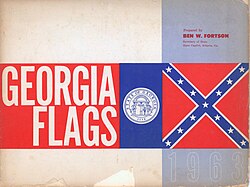
Despite rumors that he might seek higher office, Fortson remained dedicated to his role, famously stating that the position of Secretary of State was a "fascinating job" compared to that of the governor, leading him to seek re-election.
The Three Governors Controversy (1946–1947)
Between 1946 and 1947, Georgia faced a constitutional crisis when three different men claimed the governorship simultaneously. The conflict began after Eugene Talmadge won the election but passed away before he could be inaugurated.
The resulting power struggle involved three primary claimants:
- Herman Talmadge: The son of Eugene Talmadge, who was elected as governor by the General Assembly.
- Ellis Arnall: The outgoing governor who refused to vacate his office.
- Melvin E. Thompson: The newly elected lieutenant governor who also claimed the position.
The Mystery of the State Seal
During this dispute, Fortson held a critical piece of leverage: the state seal. Because the state seal is required to validate any official government action, its absence effectively paralyzed the administration. To prevent any one claimant from unilaterally exercising power, Fortson hid the seal and refused to disclose its location until the conflict was resolved.
Once the dispute concluded, Fortson revealed that he had been sitting on the seal the entire time, hiding it under a cushion in his wheelchair. He later quipped that he had been "sitting on it like a setting of duck eggs." The crisis finally ended when the Georgia Supreme Court declared Melvin E. Thompson the rightful governor, establishing a significant legal precedent in Georgia law.
Key Facts
- Role: Fortson served as Georgia's Secretary of State starting in 1946.
- Major Project: Relocated the Georgia Archives to Capitol Avenue in 1965.
- The Controversy: A 1946–1947 dispute involving Eugene Talmadge, Herman Talmadge, Ellis Arnall, and Melvin E. Thompson.
- The Seal: Fortson hid the state seal under his wheelchair cushion to halt official actions during the governor dispute.
- Resolution: The Georgia Supreme Court ruled in favor of Melvin E. Thompson.
| Claimant | Basis of Claim | Outcome |
|---|---|---|
| Herman Talmadge | Elected by the General Assembly | Unsuccessful |
| Ellis Arnall | Incumbent governor refusing to leave | Unsuccessful |
| Melvin E. Thompson | Newly elected Lieutenant Governor | Declared Governor by Supreme Court |
Frequently Asked Questions
Why did Fortson hide the state seal?
Fortson hid the seal to ensure that no official government actions could be taken by any of the three claimants until the legal dispute over who was the rightful governor was resolved.
Where did Fortson hide the state seal?
He hid the seal under a cushion in his wheelchair, literally sitting on it throughout the duration of the controversy.
What was Fortson's proudest achievement?
Fortson considered the relocation of the Georgia Archives to a larger building on Capitol Avenue in 1965 to be his proudest accomplishment.
Who eventually won the Three Governors Controversy?
The Georgia Supreme Court declared Melvin E. Thompson the governor, which ended the dispute and set a legal precedent for the state.
What other duties did Fortson perform as Secretary of State?
Beyond his standard duties, he was responsible for the preservation of the Capitol and the care of Confederate cemeteries.