
Georgia Archives: A History of Preservation and Facilities
The Georgia Archives serves as the primary repository for the state's historical records, ensuring that the documentary heritage of Georgia is preserved for future generations. From its humble beginnings in a capitol balcony to its current award-winning facility, the institution has evolved alongside the state's growing need for professional records management.
The Early Years and Rhodes Hall
The Georgia Archives was officially established on August 20, 1918, following a dedicated effort by its first director, Lucian Lamar Knight. For the first twelve years of its existence, the archives operated from a balcony within the State Capitol Building.
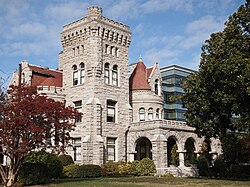
A significant transition occurred in 1930 when Amos G. Rhodes, a furniture magnate, bequeathed his residence, known as Rhodes Hall, to the state. Under the leadership of director Ruth Blair, the archives moved into this Peachtree Street mansion. Following Blair, Louise Frederick Hays led the institution from January 1, 1937, until her passing on October 14, 1951, followed by the directorship of Mary Givens Bryan.
The Modern Era and the Downtown Facility
On October 11, 1965, the Georgia Archives entered a new era with the dedication of its first purpose-built facility. This 14-story marble-clad building was recognized at the time as the most modern archival facility in the United States. This expansion allowed the institution to introduce critical new services, including microfilming and records management for local governments and state agencies.
However, by 1998, the facility faced severe structural challenges. Engineers discovered that the building was sinking, a result of groundwater issues and construction on the nearby interstate. Coupled with the high cost of repairing aging HVAC (Heating, Ventilation, and Air Conditioning) systems—with some estimates reaching $40,000,000—the state determined that new construction was the most viable path forward.
Transition to the Morrow Facility
In April 2001, the Georgia General Assembly approved a public-private partnership to build a new facility in Morrow, Georgia. This location was strategically chosen for its proximity to Clayton State University and the Southeast Regional Branch of the National Archives, which was completed in 2004.
Groundbreaking for the new site took place on October 30, 2001, and the facility officially opened its doors on May 6, 2003. The architecture of the Morrow building has since earned multiple design awards from the American Institute of Architects at the national, regional, and state levels.
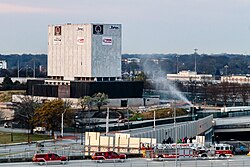
Following the relocation, the former downtown building—nicknamed the "White Ice Cube"—served briefly as a filming location for the 2014 movie Ant-Man. On March 5, 2017, the structure was demolished via implosion to make way for a new judicial complex. This site now houses the Nathan Deal Judicial Center, which opened in February 2020.
Key Facts
- Established: August 20, 1918.
- First Director: Lucian Lamar Knight.
- First Purpose-Built Home: A 14-story marble building opened in 1965.
- Current Location: Morrow, Georgia, opened May 6, 2003.
- Former Site: Now the location of the Nathan Deal Judicial Center.
| Period | Location/Facility | Key Event |
|---|---|---|
| 1918–1930 | State Capitol Building | Establishment and early operations |
| 1930–1965 | Rhodes Hall | Move to the Amos G. Rhodes mansion |
| 1965–2003 | Downtown Marble Building | First purpose-built archival facility |
| 2003–Present | Morrow Facility | Current award-winning facility |
Frequently Asked Questions
Who was the first director of the Georgia Archives?
The first director was Lucian Lamar Knight, whose prolonged efforts led to the establishment of the archives in 1918.
Why was the downtown facility demolished?
The building was sinking due to groundwater and nearby interstate construction, and the cost to repair the structure and its HVAC systems was estimated by some to be as high as $40,000,000.
Where are the Georgia Archives located now?
The archives are currently located in Morrow, Georgia, near Clayton State University and the Southeast Regional Branch of the National Archives.
What stands on the site of the former downtown archives?
The site is now occupied by the Nathan Deal Judicial Center, which opened in February 2020 after the previous building was imploded in 2017.
What awards has the current Morrow facility received?
The facility has received design awards from the American Institute of Architects at the state, regional, and national levels.