
Modern Regional Glass Art
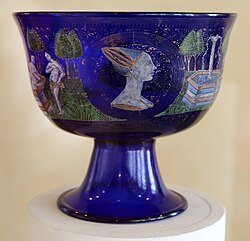
The evolution of glass from a purely functional material to a sophisticated medium of fine art is a global phenomenon. While glassmaking has ancient roots, the 20th century saw the rise of the studio glass movement, which shifted production from large industrial factories to small, artist-led studios. This transition allowed creators to prioritize artistic intent and experimentation over mass production.
From the historic furnaces of Italy to the innovative workshops of the United States and Japan, regional styles have emerged, blending traditional craftsmanship with contemporary vision.
Key Facts
- Italy is the historical heart of glassblowing, specifically the island of Murano, where techniques like incalmo and zanfirico were perfected.
- The United States catalyzed the modern studio glass movement in 1962 through the work of Harvey Littleton and Dominick Labino.
- China pioneered contemporary liuli (glass art) in 1987 via the Liuligongfang studio.
- Australia established one of the world's most comprehensive public collections of studio glass in Wagga Wagga.
- The UK balances a deep history of industrial lead crystal production with a thriving network of artist-run studios.
The American Studio Glass Movement
The United States experienced glass development in two distinct phases. The first occurred in the early to mid-1900s, centered in Toledo, Ohio, and Corning, New York. Cities like Toledo became known as the "Glass Capital of the World" due to industry leaders such as Libbey Glass and Owens-Illinois.
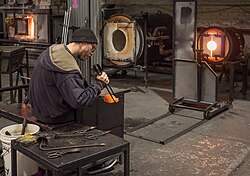
The second, more influential phase began in 1962. Ceramics professor Harvey Littleton and chemist Dominick Labino conducted workshops at the Toledo Museum of Art, experimenting with small furnaces that made molten glass accessible to individual artists in private studios. This breakthrough birthed the contemporary glassblowing movement.
Education and Institutions
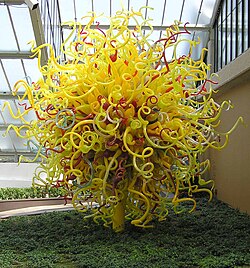
The movement spread rapidly through academia. Early programs were established at the University of Iowa, UC Berkeley, and San Jose State University. Notable figures like Dale Chihuly further expanded the field by initiating the glass program at the Rhode Island School of Design in 1969.
Today, the U.S. hosts world-renowned centers such as the Pilchuck Glass School in Seattle, the Pittsburgh Glass Center, and the Corning Museum of Glass. In New Jersey, the Wheaton Arts and Cultural Center houses the Museum of American Glass, the largest collection of its kind in the world.
European Traditions and Innovations
Italy: The Ancestral Home
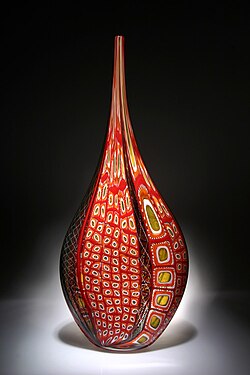
Glassblowing originated in the Roman Empire, but Italy refined it into an art form. The island of Murano became the global epicenter for refined techniques, including incalmo (joining two blown pieces), reticello (fine netting), zanfirico (woven color rods), and latticino (milky white glass). These skills were traditionally passed down through generations within family-run fornaces (furnaces).
United Kingdom
British glass art is rooted in a strong craft history, with major production centers in St. Helens, Stourbridge, and Sunderland. While the UK produces many functional objects, technical skill is held in equal regard to artistic intent. The Contemporary Glass Society, founded in 1976, continues to support artists across the region.
Belgium and The Netherlands
In the Netherlands, the Royal Leerdam Crystal factory and the Gerrit Rietveld Academy have been pivotal. In Belgium, the factory Theys & Miseur represents the nation globally, while Gent Glas focuses on introducing glass as an artistic medium to the general public.
Asian and Oceanic Perspectives
Japan
Inspired by the 1960s studio movement, Japanese glass art developed through independent studios founded by artists like Saburo Funakoshi and Makoto Ito. The island of Niijima is now a renowned hub, hosting the Niijima International Glass Art Festival every autumn.
China
While China has a long history of glass, contemporary liuli art was pioneered in 1987 by Loretta H. Yang and Chang Yi at the Liuligongfang studio. Their techniques serve as the cornerstone for modern Chinese glass art.
Australia
The Australian movement was sparked in 1974 by American artist Bill Boysen, whose mobile studio tour inspired a generation of local artists. This led to the creation of the national glass art collection in Wagga Wagga, which houses over 450 works.

Global Glass Art Summary
| Region | Key Contribution/Feature | Notable Entity/Person |
|---|---|---|
| United States | Studio Glass Movement (1962) | Harvey Littleton & Dale Chihuly |
| Italy | Refined blowing techniques (Murano) | Murano Glass Museum |
| China | Contemporary Liuli art | Liuligongfang |
| Australia | Comprehensive public collection | Wagga Wagga Collection |
| Japan | International festivals and centers | Niijima Glass Art Center |
| United Kingdom | Lead crystal and craft-based art | National Glass Centre |
Frequently Asked Questions
What is the studio glass movement?
The studio glass movement is a shift in glassmaking where artists work in small, private studios rather than large industrial factories, allowing for greater artistic expression and experimentation.
Who are the founders of the American studio glass movement?
The movement was started in 1962 by ceramics professor Harvey Littleton and chemist Dominick Labino through their workshops at the Toledo Museum of Art.
What makes Murano glass special?
Murano, Italy, is famous for developing highly refined artistic techniques such as zanfirico, reticello, and incalmo, which were passed down through generations of master blowers.
What is liuli art?
Liuli is a form of contemporary Chinese glass art, with its modern foundation established in 1987 by Loretta H. Yang and Chang Yi at the Liuligongfang studio.
Where can I find the largest collection of American glass?
The Museum of American Glass, located within the Wheaton Arts and Cultural Center in Millville, New Jersey, houses the largest collection of American glass objects in the world.