
Orkney Churches: A History of Faith and Community in the Northern Isles
The archipelago of Orkney, Scotland, possesses a rich spiritual landscape reflected in its diverse array of places of worship. With an estimated 27 active churches serving a population of approximately 21,500 inhabitants, the islands maintain a ratio of one church for every 796 people, underscoring the central role of faith in these remote communities.
Historically, the islands were organized into 21 civil parishes—administrative districts originally centered around a local church. These included Birsay and Harray, Cross and Burness, Eday, Evie and Rendall, Firth, Holm, Hoy and Graemsay, Kirkwall and St Ola, Lady, Orphir, Papa Westray, Rousay and Egilsay, Sandwick, Shapinsay, South Ronaldsay, St Andrews and Deerness, Stenness, Stromness, Stronsay, South Walls & Flotta, and Westray.
Modern Administrative Shifts
The structure of the Church of Scotland in Orkney has recently undergone a significant transformation. On October 1, 2024, nearly all Church of Scotland parishes in the islands united into a single entity known as the Orkney Islands Church of Scotland. This union allows the community to retain most of its existing church buildings while being managed by a team ministry. As of late 2024, the parish churches of Evie & Rendall, which are linked with Firth, have not yet joined this union.
Key Facts
- Church Density: Approximately one active church for every 796 residents.
- Major Union: Most Church of Scotland parishes united into the Orkney Islands Church of Scotland in October 2024.
- Historic Landmark: St Magnus Cathedral, founded in 1137, is the most prominent historic site, though it is technically no longer a cathedral.
- Denominational Diversity: While the Church of Scotland is predominant, the islands also host Episcopal, Roman Catholic, Baptist, United Free, and Jehovah's Witness congregations.
The Architectural and Spiritual Landmarks of Orkney
St Magnus Cathedral and Kirkwall
The spiritual heart of the islands is found in Kirkwall. St Magnus Cathedral stands as a testament to the region's Norse heritage. Construction began in 1137 under Rögnvald Kali to honor Magnus Erlendsson, the Earl of Orkney, who was killed by his cousin Haakon Paulsson in April 1116.
![Magnus Erlendsson, Earl of Orkney was killed by his cousin Haakon Paulsson in April 1116. The building of St. Magnus Cathedral, Kirkwall in his honour by Rögnvald Kali commenced in 1137.[1]](/images/83/39/83392473a559f70f7e888aa17c7e58418f34e763d2a1dca9c7a58ce4afa1460a.jpg)
Beyond the cathedral, Kirkwall is home to a variety of denominations, including the Roman Catholic church of Our Lady & St Joseph, the Independent Kirkwall Baptist Church, and St Olaf's Episcopal Church. The latter, built between 1876 and 1878, represents an Episcopacy in the islands that dates back to the 16th century.
Rural and Island Parishes
Across the mainland and the outlying isles, churches often share resources to maintain their presence. For example, the churches in Evie, Rendall, Firth, and Rousay share a single minister. Similarly, the churches in Hoy & Walls, Flotta, and Orphir & Stenness operate under a shared ministry.
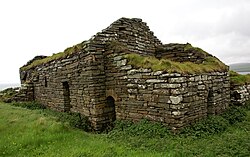
Some locations feature unique historical transitions. The Papa Westray Church of Scotland building was originally a Free Church, and the Westray Church of Scotland united with the Westray United Free Church in 2005.
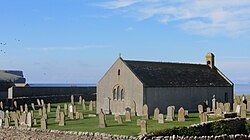
In more remote areas, services are adapted to the geography. The Stromness & Graemsay Church of Scotland, for instance, holds monthly services in a community center on Graemsay to ensure accessibility for its parishioners.
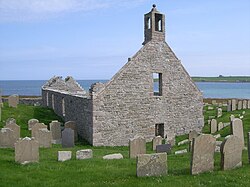
Summary of Notable Orkney Churches
| Church Name | Location/Parish | Denomination | Notes |
|---|---|---|---|
| St Magnus Cathedral | Kirkwall | Church of Scotland | Founded 1137; dedicated to St Magnus |
| St Olaf's Episcopal Church | Kirkwall | Episcopal | Built 1876-1878 |
| Firth Church of Scotland | Firth | Church of Scotland | Medieval origins |
| Orphir & Stenness | Orphir | Church of Scotland | Medieval origins |
| Milestone Community Church | Sandwick (Dounby) | Church of Scotland | Established 2011-2012 |
| Our Lady & St Joseph | Kirkwall | Roman Catholic | Dedicated to SS Mary & Joseph |
Frequently Asked Questions
What is the Orkney Islands Church of Scotland?
It is a single unified parish formed on October 1, 2024, by the merger of almost all Church of Scotland parishes in Orkney to be served by a team ministry.
When was St Magnus Cathedral built?
Construction of the cathedral began in 1137, commissioned by Rögnvald Kali in honor of Magnus Erlendsson, Earl of Orkney.
Are there non-Presbyterian churches in Orkney?
Yes, the islands host several other denominations, including the Episcopal Church, Roman Catholic Church, Baptist churches, and the United Free Church.
How are the rural churches managed?
Many rural churches utilize shared ministries, where one minister serves multiple parishes, such as the shared ministry between Evie, Rendall, Firth, and Rousay.
Which churches in Orkney have medieval origins?
The Firth Church of Scotland and the Orphir & Stenness Church of Scotland are noted for their medieval origins.