
Patrick Leahy Burlington International Airport: A Century of Aviation History
From its humble beginnings as a grass landing strip to its current status as a vital regional hub, the Patrick Leahy Burlington International Airport (BTV) has mirrored the evolution of American aviation. What started as a daring landing by a World War I pilot has grown into a sophisticated facility serving hundreds of thousands of passengers annually, blending military necessity with commercial growth.
The Early Years: From Grass Fields to Formal Recognition
The airport's history began on Saturday, August 14, 1920, when Captain Hubert Stanford Broad, a veteran of the British Air Forces from World War I, performed stunts over the city before landing his Avro plane north of Williston Road. This event sparked a movement to establish a permanent aviation site.
Driven by the vision of WWI pilot and future Mayor Johnny Burns, Aviation Commissioner Mason Beebe, and Chamber of Commerce secretary James Taylor, funds were raised to purchase land and create a landing strip. The early infrastructure was rudimentary; the city used a steamroller and horse-drawn grader to level the field, and the airport office was housed in the relocated 1853 Eldridge Schoolhouse.
In 1921, the facility lacked instruments or beacons, relying instead on a circle of crushed limestone to guide pilots. Despite these limitations, Governor Hartness—himself a pilot—formally dedicated the Burlington Municipal Airport, known as "Vermont's Aerodrome," on September 22, 1921. By 1928, the airport gained recognition from the Aeronautical Chamber of Commerce of America, and the first hangar rental fees were introduced to ensure financial sustainability.
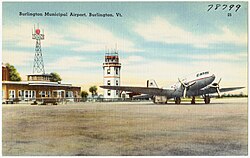
The Golden Age and Aviation Pioneers
The 1930s brought celebrity and record-breaking feats to Burlington. In 1931, aviation stars Post and Gatty headlined a local air meet. The era also saw the rise of Grace Hall Pugh, a teacher from Ferrisburgh who became Vermont's first licensed female pilot in 1938, notably receiving her license from the Motor Vehicle Department before an Aeronautics Board existed.
One of the most significant visits occurred on May 22, 1934, when Amelia Earhart arrived on a Stinson Trimotor. Greeted by 2,000 people, Earhart was presented with the keys to the city and used her platform to advocate for flight as a conventional means of travel for all. She returned in 1935 to lobby the Vermont State House for increased regional aviation support.
World War II and the Defense Zone Era
The onset of World War II transformed the airport's operational scale. The federal government established a Defense Zone extending 150 miles inland from the coast, restricting private aircraft. Because Burlington was located approximately 3 miles outside this zone, it became a critical training hub for pilots from restricted areas, including Boston's Logan Airport.
This surge in activity led to staggering numbers; on August 14, 1942, and February 11, 1943, the airport was noted as the busiest in the world, recording 662 and 793 landings respectively. Under the leadership of Harold High, over 100 pilots were trained, with the airfield averaging 4 to 6 landings every hour, 24 hours a day.
Post-War Expansion and the Jet Age
Following the war, airport manager Hugh Finnegan oversaw a massive expansion. By 1958, the airport grew from its original 72 acres to 942 acres, adding a modern control tower, a new terminal, and infrastructure to support the Vermont National Guard.
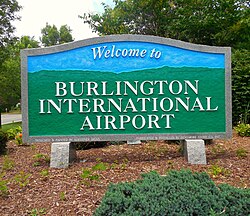
The 1960s ushered in the jet age. In 1964, Congressman Gerald Ford attended the launch of Mohawk's jet service, which reduced travel time to JFK to just 42 minutes. To shed its image as a small community strip, the Board of Aldermen voted on February 24, 1969, to rename the facility Burlington International Airport.
Modernization and Growth (1970s–1990s)
A new 40,000-square-foot terminal opened in 1973 following a $1.25 million bond. The 1980s saw a passenger surge due to the arrival of People Express, the first "no-frills" airline, in 1982. This growth necessitated a 1986 expansion that increased the terminal to 61,000 square feet and introduced enclosed boarding walkways for winter comfort.
The 21st Century: Challenges and Sustainability
The turn of the millennium brought both new partnerships and security shifts. JetBlue began service to JFK in 2000, and following the events of September 11, 2001, security transitioned from the Burlington Police Department to the TSA. Between 2000 and 2008, $24 million was invested in renovations, including a 948-space parking garage and five new gates.
While the airport hit a passenger record in July 2008 with 759,154 travelers, it later faced competition from Plattsburgh International Airport. Financial hurdles also emerged in 2010 when a city-owned cable provider's debt led to a credit downgrade, forcing the airport to borrow $7.5 million from the city for garage expansions.
In recent years, BTV has focused on sustainability and modernization. In 2019, the airport installed a 2,000-panel solar array and partnered with Tesla for electric charging stations. In April 2023, the airport was renamed the Patrick Leahy Burlington International Airport in honor of the former U.S. Senator.
Key Facts
- First Flight: August 14, 1920, by Captain Hubert Stanford Broad.
- Peak Activity: Noted as the world's busiest airport on two dates in 1942 and 1943 due to WWII training.
- Land Growth: Expanded from 72 acres in 1920 to 942 acres by 1958.
- Pioneers: Hosted Amelia Earhart in 1934 and 1935; home to Vermont's first licensed female pilot, Grace Hall Pugh.
- Sustainability: Features a 2,000-panel solar array and Tesla charging stations.
- Current Status: Renamed Patrick Leahy Burlington International Airport in 2023.
| Era/Year | Key Milestone | Significant Detail |
|---|---|---|
| 1920 | Founding | First landing by Capt. Hubert Stanford Broad |
| 1934 | Celebrity Visit | Amelia Earhart promotes aviation |
| 1942-43 | WWII Peak | Busiest airport in the world (training hub) |
| 1969 | Rebranding | Renamed from "Municipal" to "International" |
| 2000 | Low-Cost Entry | JetBlue begins service to JFK |
| 2023 | Honoring Legacy | Renamed Patrick Leahy Burlington International Airport |
Frequently Asked Questions
Why was Burlington Airport the busiest in the world during WWII?
Because it was located just outside the federal Defense Zone, it became a primary training site for pilots who were restricted from operating in coastal areas, including those from Boston's Logan Airport.
Who was the first licensed female pilot in Vermont?
Grace Hall Pugh became the first licensed female pilot in Vermont in 1938, originally obtaining her license through the Motor Vehicle Department.
What aircraft are currently the largest to serve BTV?
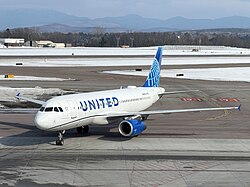
The largest scheduled passenger planes are the Airbus A320 and Boeing 737 (United Airlines), A320s (Delta Air Lines), and A319s (American Airlines).
How has the airport integrated green technology?
The airport has installed a 2,000-panel solar array on its northern garage rooftop and provides twelve Tesla electric charging stations.
What is the farthest destination served from BTV?
Denver, Colorado, is the farthest destination currently served by any airline operating out of the airport.