
Ricardo Rosselló: Gubernatorial Campaign and Tenure as Governor of Puerto Rico
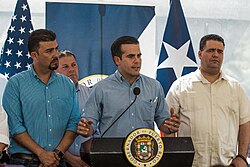
Ricardo Rosselló served as the Governor of Puerto Rico, entering office as the second-youngest person to hold the position. His path to the governorship was defined by a scientific approach to governance and a central focus on Puerto Rican statehood as the primary engine for economic recovery.
The 2016 Gubernatorial Campaign
Rosselló's ascent began long before the 2016 election. Starting in 2013, he developed the Plan para Puerto Rico (Plan for Puerto Rico), a comprehensive blueprint designed to address the island's systemic economic and political challenges. To ensure the plan was realistic, Rosselló studied governance models in Florida, Estonia, and Finland.
During his campaign, Rosselló positioned himself against the policies of incumbent governor Alejandro García Padilla, notably leading protests against a proposed Value Added Tax. On September 19, 2015, he officially announced his candidacy, followed by a record-breaking rally at the Roberto Clemente Coliseum in San Juan.
After winning the New Progressive Party primary against Pedro Pierluisi on June 5, 2016, Rosselló faced PPD candidate David Bernier in the general election. On November 8, 2016, Rosselló was elected Governor with 41% of the vote and was sworn into office on January 2, 2017.
Key Facts
- Election: Won the 2016 gubernatorial election with 41% of the vote.
- Economic Focus: Implemented zero-base budgeting and sought to reduce government agencies from 131 to approximately 30-35.
- Statehood: Advocated for statehood as a civil rights issue and a key to economic stability.
- Recovery: Secured $18.5 billion from HUD for long-term recovery following Hurricane Maria.
- Social Policy: Banned conversion therapy for LGBT youth and legalized medicinal marijuana.
Domestic Policies and Governance
Rosselló's first day in office was marked by six executive orders. These included decreeing a state of fiscal emergency (OE-2017-001) and creating the COF (OE-2017-002) to maximize federal funding. He also focused on streamlining bureaucracy through the Permitting Reform Act (Law 19-2017), which introduced a Single Permit and a Unified Information System to attract foreign investment.
Other significant legislative actions included:
- Labor and Equality: Signing the Equal Pay Act and an executive order guaranteeing equal pay for women. He also raised the minimum wage for government-contracted construction workers from $8.25 to $15.00 per hour.
- Public Safety and Health: Establishing the Puerto Rico Department of Public Safety and legalizing medicinal marijuana through a legislative process.
- Administrative Reform: Passing the "New Government Law" to consolidate agencies and introducing anti-corruption laws targeting bribery and fraud.
Economic Strategies and Debt Management
Rosselló inherited a severe financial crisis, with a government debt of $70 billion (approximately $12,000 per capita), a 45% poverty rate, and 14.2% unemployment. To address this, he implemented austerity measures, including a 10% cut in operating expenses and a 20% reduction in political appointees.
Working under PROMESA (the federal control board), Rosselló reached an agreed-upon fiscal plan. He testified that his reforms reduced operational costs by 17% and prevented over 20,000 layoffs via a voluntary transition program. To stimulate the economy, he signed the Betting Committee Act, legalizing cryptocurrency and various forms of gambling, including esports and sports betting.
Recovery and Employment
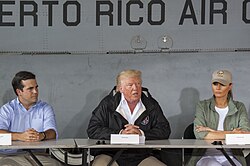
In July 2018, his administration reported an unemployment rate of 9.3%, claiming it was the lowest in 50 years. Furthermore, he secured a historic $18.5 billion grant from the US Department of Housing and Urban Development (HUD) for infrastructure and housing repair following Hurricane Maria.
Social, Environmental, and Educational Reforms
Rosselló's administration pursued several targeted reforms across various sectors:
- Environment: Passed laws to end coal use and shift to renewable energy, aiming to cut carbon emissions by 50% within a decade.
- Education: Introduced school vouchers and charter schools in March 2018, ensuring 70% of the education budget reached local schools.
- Tourism: Created the Tourism Intelligence Platform and a Destination Management Organization (DMO) to enhance Puerto Rico's global competitiveness.
- Social Issues: While fiscally conservative, Rosselló supported abortion rights and gender equality. He banned conversion therapy for minors and established the first advisory board on LGBT issues, though he initially opposed marriage equality.
The Push for Statehood
Rosselló viewed statehood as the solution to Puerto Rico's "colonial dilemma." He argued that statehood was a civil rights issue necessary for absolute democracy. On June 11, 2017, he oversaw a plebiscite where 97% of voters favored statehood. However, the result was contested due to a low turnout of 23% following boycott calls from political rivals.
| Sector | Key Action/Law | Primary Objective |
|---|---|---|
| Economy | PROMESA Fiscal Plan | Debt restructuring and cost reduction |
| Business | Permitting Reform Act | Streamlining permits for investment |
| Social | Equal Pay Act | Gender-based wage equality |
| Environment | Renewable Energy Shift | 50% carbon emission reduction |
| Education | Education Reform Law | Charter schools and school vouchers |
Frequently Asked Questions
What was the purpose of the Plan para Puerto Rico?
The Plan para Puerto Rico was a blueprint developed by Rosselló years before his candidacy to provide a realistic and complete political agenda for solving the island's economic and political problems.
How did Rosselló address the government debt crisis?
He implemented austerity measures, such as cutting operating expenses by 10%, and worked with the PROMESA federal control board to establish a fiscal plan and seek amicable resolutions with creditors.
What were the results of the 2017 statehood plebiscite?
The plebiscite showed 97% support for statehood; however, the validity was questioned because only 23% of the eligible electorate participated.
What environmental goals did the Rosselló administration set?
The administration passed laws to eliminate the use of coal and transition to renewable energy, with the goal of reducing carbon emissions by 50% over ten years.
How did Rosselló approach LGBT rights?
His record was mixed; while he initially opposed marriage equality, he supported adoption rights for same-sex couples, created an LGBT advisory board, and banned conversion therapy for youth.