
Rowlinson's Contributions to Capillarity and the History of Science
Throughout a prolific academic career, Rowlinson established himself as a cornerstone of physical chemistry and the history of science. With over 200 papers and book chapters to his name, his work bridged the gap between complex mathematical theory and the physical properties of matter, leaving a lasting impact on both scientific research and engineering.
Key Facts
- Authored over 200 scientific papers and book chapters.
- Co-developed the Molecular Theory of Capillarity with Benjamin Widom in 1982.
- Wrote the definitive 2002 work on cohesion (the forces that cause molecules to stick together).
- Served as the editor of the academic journal Molecular Physics.
- Produced a masterwork translation and biography of physicist Johannes Diderik van der Waals.
Advancements in Capillarity and Cohesion
Rowlinson's primary scientific focus centered on capillarity—the ability of a liquid to flow in narrow spaces without the assistance of external forces—and cohesion, the intermolecular forces that bind molecules together. These concepts are fundamental to understanding how liquids behave at a microscopic level.
In 1982, Rowlinson and Benjamin Widom co-authored the Molecular Theory of Capillarity. This work became a pillar of scientific and engineering literature, garnering more than 2,000 citations by 2010. This achievement followed his 1958 publication, Liquids and Liquid Mixtures, which Benjamin Widom has described as a "classic" in the field.
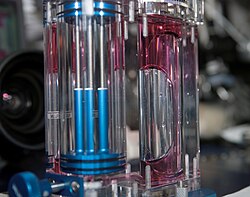
Further expanding his exploration of matter, Rowlinson published Cohesion in 2002. This acclaimed work provided a detailed analysis of intermolecular forces, their scientific evolution, and their direct effect on the properties of matter. He also contributed to the education of future professionals by co-writing the 1975 textbook Thermodynamics for Chemical Engineers.
Broadening Scientific Horizons
Beyond his core expertise, Rowlinson applied his analytical skills to a diverse array of topics. His writing spanned several complex domains, including:
- Phase transitions and critical phenomena.
- Computer simulations of interfaces.
- Information theory.
- The study of glaciers.
The Intersection of Science and History
Rowlinson was not only a practitioner of science but also a dedicated historian of the field. His journey into the history of science began in 1973 with a paper in Nature titled "The Legacy of van der Waals," focusing on the Dutch physicist Johannes Diderik van der Waals.
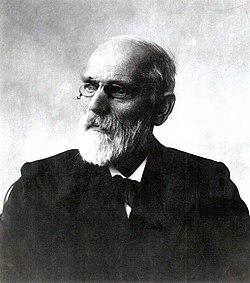
This interest culminated in a 1988 translation of van der Waals' doctoral thesis and a comprehensive biography published in 1996. Benjamin Widom praised the translation as a "masterwork" and described the accompanying introduction as "brilliant both as science and as history." Rowlinson's commitment to history was also evident in his Molecular Theory of Capillarity, which integrated historical context alongside technical data.
Academic Leadership and Administration
In the United Kingdom, Rowlinson played a vital role in the administration and growth of scientific education. At Oxford, he expanded the scope of both physical chemistry research and the teaching of the history of science. He also provided significant support to the collections housed at the Museum of the History of Science.
| Year | Publication Title | Primary Focus |
|---|---|---|
| 1958 | Liquids and Liquid Mixtures | Liquid properties (Classic work) |
| 1975 | Thermodynamics for Chemical Engineers | Chemical engineering textbook |
| 1982 | Molecular Theory of Capillarity | Capillarity and molecular theory |
| 1988 | Translation of van der Waals' Thesis | History of science / Physics |
| 1996 | Biography of Johannes Diderik van der Waals | Scientific biography |
| 2002 | Cohesion | Intermolecular forces |
Frequently Asked Questions
What is the Molecular Theory of Capillarity?
Co-written by Rowlinson and Benjamin Widom in 1982, it is a highly cited work that explains the physics of capillarity from a molecular perspective, blending technical analysis with scientific history.
What is cohesion in the context of Rowlinson's work?
Cohesion refers to the intermolecular forces that cause molecules to "stick" together. Rowlinson detailed these forces and their impact on the properties of matter in his 2002 book, Cohesion.
Who was Johannes Diderik van der Waals?
He was a Dutch physicist whose work was a major focus for Rowlinson, who wrote a biography of him and translated his doctoral thesis.
What role did Rowlinson play at Oxford?
Rowlinson expanded the research scope of physical chemistry and the teaching of the history of science at Oxford, while also supporting the Museum of the History of Science.
Which academic journal did Rowlinson edit?
Rowlinson served as the editor of the journal Molecular Physics.