
Snow Plow History: From Horse-Drawn Wedges to Modern Machinery
Winter weather has long posed a challenge for transportation, turning vital roads into impassable barriers of ice and powder. To combat this, humans developed the snow plow—a tool designed to push or move snow away from a path. While we now take for granted the massive trucks that clear our highways, the journey from simple wooden planks to high-powered machinery is a fascinating tale of engineering and necessity.
The Early Days of Manual Clearing
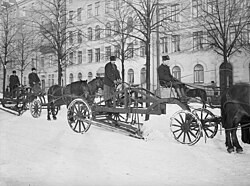
Before the era of engines, snow removal relied on animal power. The earliest snow plows were horse-drawn wedge-plows constructed from wood. These simple devices functioned as large triangles that split the snow as the horse pulled them forward.
One of the earliest written records of this technology appears in 1792, describing a tool used in New Hampshire. This instrument consisted of wooden planks arranged in a triangular form, featuring two side boards specifically designed to push the snow out to either side of the road.
The Industrial Shift: Railways and Early Motors
The rise of rail travel and the eventual invention of the automobile accelerated the need for more efficient clearing methods. In the United States, specialized "snow-clearers" for railways were patented as early as the 1840s, ensuring that trains could maintain schedules despite heavy snowfall.
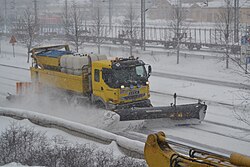
The transition to motorized road clearing occurred in the early 20th century. In 1913, Good Roads Machinery of Kennett Square, Pennsylvania, manufactured the first snow plow built specifically for motor equipment. This design was created to meet the strict requirements of the New York City Street Cleaning Bureau. While Good Roads is often credited as the originator of the modern snow plow, the company had been using horse-drawn steel blade road graders for snow removal since its founding as American Road Machinery in 1878.
Pioneers of Truck-Mounted Plowing
As trucks became more common, entrepreneurs began adapting them for winter work. Carl Frink of Clayton, New York, became a key figure in this movement. In 1919, Frink equipped a bus with a steel V-blade plow for a local bus line. By 1920, he expanded his operations by equipping a Linn halftrack—a vehicle with tracks in the rear and wheels in the front—with a plow and side-blades.
The Linn Co. heavily promoted the superior traction of their halftracks, allowing them to dominate the eastern U.S. market. However, by the 1930s, these vehicles were largely replaced by four-wheel drive trucks, which offered significantly higher speeds.
International Innovations
The evolution of snow removal was a global effort. In 1923, brothers Hans and Even Øveraasen of Norway developed an early snow plow designed for use with cars. This innovation laid the groundwork for Øveraasen Snow Removal Systems, a company that continues to provide clearing equipment for roads, railways, and airports today.
Key Facts
- First Records: Wooden wedge-plows were documented in New Hampshire as early as 1792.
- Railway Innovation: US railway "snow-clearers" were patented in the 1840s.
- Motorization: The first dedicated motorized snow plow was built by Good Roads Machinery in 1913.
- Traction Evolution: Linn halftracks dominated the eastern US market until the 1930s before being replaced by 4WD trucks.
- Global Reach: The Øveraasen brothers started their Norwegian snow-clearing tradition in 1923.
Snow Plow Evolution Summary
| Era/Year | Technology | Key Innovator/Region |
|---|---|---|
| 1792 | Horse-drawn wooden wedge-plows | New Hampshire, USA |
| 1840s | Railway "snow-clearers" | United States |
| 1913 | First motorized snow plow | Good Roads Machinery |
| 1920 | Halftrack-mounted plows | Carl Frink / Linn Co. |
| 1923 | Car-mounted snow plows | Hans and Even Øveraasen |
Frequently Asked Questions
What were the first snow plows made of?
The earliest snow plows were horse-drawn instruments made of wooden planks arranged in a triangular wedge shape to push snow to the sides of the road.
Who is credited with creating the modern motorized snow plow?
Good Roads Machinery of Pennsylvania is unofficially credited as the originator, having built the first plow specifically for motor equipment in 1913.
What is a Linn halftrack?
A Linn halftrack was a vehicle combining wheels and tracks to provide superior traction in snow. They were widely used for plowing in the eastern US until the 1930s.
When did snow plows begin to be used on cars?
In 1923, Hans and Even Øveraasen of Norway constructed an early snow plow specifically for use on cars, leading to the foundation of their snow removal company.
How did early railway snow removal differ from road removal?
Railway snow-clearers were patented much earlier (1840s) than motorized road plows (1913) to ensure that trains could navigate obstructed tracks.