
Strawbridge & Clothier: A Legacy of Retail Innovation
Strawbridge & Clothier (S&C) was more than just a department store; it was a pioneer that helped reshape the American retail landscape. From introducing early suburban branch stores to innovating customer credit, the company set standards for service and accessibility that influenced the industry for decades.
The Rise of Suburban Branch Stores
In May 1930, Strawbridge & Clothier took a bold step by opening one of the first suburban branch department stores in the United States. Located in the Suburban Square shopping center in Ardmore, Pennsylvania, this move signaled a shift away from the traditional city-center shopping model.
This expansion continued in 1931 with a second "satellite" store in Jenkintown, Pennsylvania. This specific location was later recognized for its architectural and historical significance, being listed on the National Register of Historic Places in 1988.
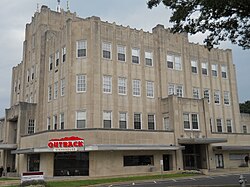
Throughout the following decades, the company expanded its footprint across Pennsylvania, New Jersey, and Delaware, primarily by integrating into the emerging shopping mall culture. While the flagship store saw limited profitability—mostly during the 1940s—the branch stores became the company's strategic engine for growth.
Expansion Timeline and Locations
The network grew steadily from the 1950s through the 1980s, with key openings including:
- 1952: Wilmington
- 1961: Cherry Hill
- 1964: Springfield
- 1966: Plymouth Meeting
- 1968: Neshaminy
- 1970: Echelon
- 1973: Exton
- 1978: Christiana
- 1982: Burlington, New Jersey
- 1983: Wilmington (including the final S&C store at Concord Mall)
- 1988: King of Prussia
- 1989: Willow Grove
Diversification and the Clover Chain
To compete with the rise of discount retailers in 1969, Strawbridge launched the Clover discount store chain. The first Clover store opened in 1971, primarily occupying strip centers rather than malls. This venture proved highly expansive, eventually growing to 26 locations—surpassing the 21 full-service S&C stores. Most Clover locations remained operational until the winter of 1997.
Branding and Store Features
Strawbridge & Clothier was renowned for its attention to detail and customer experience. Many locations featured in-store restaurants, including those at the Christiana, Exton Square, Plymouth Meeting, Neshaminy, and Cherry Hill malls, as well as the Jenkintown store. The flagship store featured the exclusive Corinthian Room on its sixth floor.
The company also revolutionized the way people shopped by introducing revolving charge account cards, allowing customers to manage their purchases over time.
The Visual Identity of S&C
The brand's identity was closely tied to its iconic shopping bags and the "Seal of Confidence." This seal, used from 1911 to 2006, depicted William Penn and a Lenape tribesman shaking hands, symbolizing a "never written, never broken" treaty. This image represented the company's Quaker-based tradition of honesty and fairness, which included a money-back guarantee on all merchandise.
![The S&C "Seal of Confidence" (1911-2006), depicting William Penn and a Lenape tribesman shaking hands, their "never written, never broken" treaty; it stood for S&C's Quaker-based tradition of fairness and honesty, which included a money-back guarantee on all merchandise[5]](/images/89/b2/89b2768ae0104653603a27b113dbf1aaa31a59fb335a6fcbeed2b1d2f1c5fb74.jpg)
Over the years, the branding evolved. The 1960s bags featured a modern script and the Seal of Confidence. By the late 1970s and 1980s, the bags shifted to a bright glossy yellow with a vertical, pseudo-calligraphic trademark in black.
The Flagship's Lucky Charm
A beloved fixture of the flagship store was a large bronze statue of a wild boar, a replica of Pietro Tacca's Il Porcellino. According to local legend, rubbing the boar's nose brought good luck, leaving the statue with a permanently shiny nose.
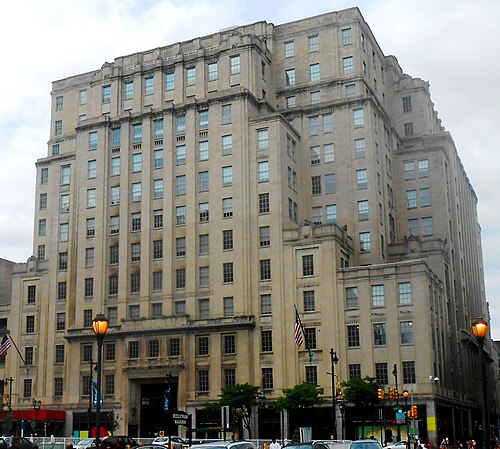
Repurposing the Flagship Store
Following the closure of the original department store, the flagship building underwent a series of transformations to adapt to modern urban needs. In July 2006, PREIT purchased the lower floors, converting some areas into retail spaces and others into offices.
The building's evolution continued with several high-profile tenants:
- Media: In July 2012, The Philadelphia Inquirer and Philadelphia Daily News moved their headquarters to the third floor.
- Retail: In October 2014, Century 21 opened its first non-NYC location on the street and second levels (closing in 2020).
- Grocery: On December 16, 2021, a Giant Heirloom Market opened on the ground level at 8th Street.
Additionally, the uppermost floors were converted to offices and are owned by the American Financial Realty Trust of Jenkintown.
Key Facts
- Pioneering Move: Opened one of the first suburban branch stores in the U.S. in May 1930.
- Retail Innovation: Introduced revolving charge account cards to the public.
- Discount Venture: Launched the Clover chain in 1971, which grew to 26 locations.
- Brand Values: The "Seal of Confidence" represented a Quaker tradition of fairness and a money-back guarantee.
- Historic Site: The Jenkintown store is listed on the National Register of Historic Places.
| Category | Details |
|---|---|
| First Suburban Store | Suburban Square, Ardmore, PA (1930) |
| Discount Chain | Clover (Launched 1971, 26 locations) |
| Key Branding | Seal of Confidence (1911-2006) |
| Flagship Landmark | Il Porcellino (Wild Boar statue) |
| Final Store Built | Concord Mall, Wilmington, DE (1983) |
Frequently Asked Questions
What was the significance of the Seal of Confidence?
The Seal of Confidence depicted William Penn and a Lenape tribesman shaking hands. It symbolized the company's Quaker-based commitment to honesty, fairness, and a money-back guarantee on all merchandise.
How did Strawbridge & Clothier change the shopping experience?
The company was a pioneer in two major ways: it helped start the trend of suburban branch stores in the 1930s and revolutionized retail payments by introducing revolving charge account cards.
What happened to the Clover stores?
Clover was a discount chain launched in 1969 to compete with retailers like Target. It grew to 26 locations, mostly in strip centers, but most of these stores closed in the winter of 1997.
What is currently located in the former flagship store?
The building is now a mixed-use space. It houses a Giant Heirloom Market on the ground level, office spaces (including those owned by American Financial Realty Trust), and has served as the headquarters for The Philadelphia Inquirer and Philadelphia Daily News.
Which Strawbridge & Clothier store is historically recognized?
The Jenkintown, Pennsylvania store was listed on the National Register of Historic Places in 1988.