
Tolkien and the Great War: How the First World War Shaped Middle-earth
For many, J.R.R. Tolkien is remembered as the quintessential Oxford don—a kindly, wrinkled professor in a tweed coat. However, beneath the surface of his academic persona lay the experiences of a young man who survived one of the most brutal conflicts in human history. The scholarly work Tolkien and the Great War by Garth delves into this formative period, arguing that the horrors and friendships of the First World War were not merely biographical footnotes, but the very soil from which Middle-earth grew.
By examining the intersection of Tolkien's military service and his creative awakening, Garth challenges the notion that Tolkien's mythology was a form of escapism. Instead, the research suggests that the "terrible birth pangs" of the modern world directly informed the themes of loss, courage, and resilience found in The Lord of the Rings.
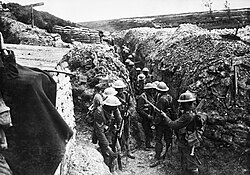
Key Facts
- Military Service: Tolkien served as a regimental signals officer with the Lancashire Fusiliers on the Western Front.
- The Somme: Tolkien saw significant action during the Battle of the Somme in 1916, surviving multiple encounters through a combination of courage and luck.
- TCBS: The Tea Club and Baristas Society (TCBS) was a close-knit group of friends whose bond provided a "true and proper order" amidst the chaos of war.
- Creative Genesis: Tolkien began developing his "monumental mythology" during the war, using myth to revitalize a society facing a crisis of disenchantment.
- Literary Contrast: Unlike the ironic, disenchanted tone of war poets like Siegfried Sassoon, Tolkien's work focuses on heroes who persevere despite flaws and failure.
Scholarly Reception and Literary Impact
Academic critics have largely hailed Garth's work as a landmark publication. Scholars such as Janet Brennan Croft and Luke Shelton emphasize that the book provides a gripping account of Tolkien's training and battlefield experiences, filling a void left by earlier biographies that focused primarily on his later years. Chad Engbers notes that Garth successfully blends internal psychological history with external military records to create a comprehensive portrait of the young author.
A central point of scholarly discussion is whether Tolkien's early depictions of monsters, such as goblins and trolls, were linked to his perceptions of the Germans. While Garth suggests such a link may have existed initially, he clarifies that Tolkien later held firm anti-racist views.
![Garth contrasted Tolkien's approach to war in his fiction with the ironic and disenchanted writings of war poets like Siegfried Sassoon.[8][9]](/images/c5/1d/c51d220aafe6189935782fa891cf75276d0eac2476ac504d37527443036f110a.jpg)
The Role of Friendship and Myth
Historian Bradley J. Birzer identifies three primary themes in Garth's analysis: the stabilizing power of male friendship, the destructive nature of modernity and war, and the ability of myth to heal society. Birzer argues that the TCBS served as a precursor to the Inklings, the famous literary circle including C.S. Lewis and Owen Barfield.
Contrasting the War Poets
Shaun Hughes highlights a critical distinction between Tolkien and contemporary war poets like Wilfred Owen and Siegfried Sassoon. While the latter often wrote from a viewpoint of disenchantment that stripped soldiers of their agency, Tolkien's narratives—exemplified by characters like Túrin Turambar—restore a sense of balance. In Tolkien's world, glory and honor are not destroyed by the stress of war, but are tested and refined.
The Intersection of Faith, Machine, and Nature
Tolkien's Roman Catholic faith and his passion for philology (the study of language in oral and written historical sources) are deeply intertwined with his war experience. Scholar Ralph C. Wood notes that Garth links the "triumph of the murderous machine"—the tanks and howitzers of WWI—to Tolkien's preoccupation with the loss of the natural world.
![The "triumph of the murderous machine":[9] a British 12-inch howitzer with its 750 lb (340 kg) shell at Thiepval, September 1916](/images/2a/f5/2af5925025f3038689b83a74515f024b61a3f2c8d6f7aa88e67bdfed8cea539b.jpg)
This conflict between industrial destruction and organic beauty is a cornerstone of Middle-earth. Tolkien's love for Northern mythology was not about celebrating victory, but about finding a "somber defeat"—the ability to remain cheerful and courageous even in the face of inevitable loss. While some critics, like Wood, feel Garth occasionally downplays the explicit Christian elements of Tolkien's vision, they agree that the work brilliantly connects moral terrors to historical concerns.
Summary of Critical Perspectives
| Reviewer | Primary Focus | Verdict |
|---|---|---|
| Janet Brennan Croft | Early life and military records | Gripping account of battlefield experience |
| Bradley J. Birzer | Themes of friendship and modernity | Essential, though footnotes are "unfriendly" |
| Shaun Hughes | Comparison to war poets | Restores balance to WWI narratives |
| Ralph C. Wood | Faith and the "murderous machine" | Essential work; slightly underplays Christianity |
| Humphrey Carpenter | Biographical detail and poetry | Moving story, but occasionally "plodding" |
Frequently Asked Questions
Did the First World War directly influence the creation of Middle-earth?
Yes. Evidence suggests that Tolkien began his mythology during the war. The conflict's "birth pangs" and the tension between industrial machinery and the natural world are reflected in the landscapes and struggles of Middle-earth.
How did Tolkien's experience differ from other war poets?
While poets like Sassoon and Owen often focused on the irony and meaninglessness of war, Tolkien's work emphasizes perseverance and the endurance of honor and courage, even in the face of defeat.
What was the TCBS and why was it important?
The TCBS (Tea Club and Baristas Society) was a group of close friends who supported each other during the war. This bond of friendship provided a sense of order and stability that later influenced the formation of the Inklings.
Was Tolkien's writing a form of escapism from his war trauma?
Scholars argue the opposite; rather than escaping reality, Tolkien's "disgust, anger, and condemnation" of the war's horrors underpin his creative work, making it a response to the modern world rather than a flight from it.
What was Tolkien's role during the Battle of the Somme?
Tolkien served as a regimental signals officer. Contrary to some earlier biographical accounts, research shows he saw significant action and survived multiple dangerous encounters.