
Whitehall: The Historic Estate of Governor Sharpe
Nestled in the landscape of colonial Maryland, Whitehall stands as a testament to 18th-century ambition and architectural elegance. Originally conceived as a lavish retreat for entertaining, the estate evolved from a guest pavilion into a permanent residence, reflecting the shifting fortunes of its creator, Governor Sharpe.
The Vision and Construction of the Estate
The origins of Whitehall began in 1763 when Governor Sharpe acquired 814 acres of Homewood's Lott. A year later, he expanded his holdings by bidding for the Whitehall tract, with the proceeds benefiting the vestry of St. Margaret's Church. This created a sprawling 1,000-acre (400 ha) estate featuring a pavilion, entrance court, parks, and meticulously designed gardens.
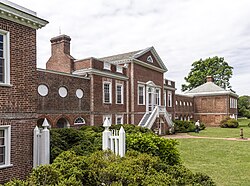
Sharpe's original motivation for the house was romantic; he intended it for his bride-to-be, Mary Ogle. However, the plans were thwarted when Mary married John Ridout, Sharpe's close friend and secretary. Despite this personal setback, construction continued. The central portion of the house was completed around 1765, serving as a pavilion to entertain guests who arrived by boat from Annapolis.
Between 1765 and 1769, wings were added to the central structure. The estate transitioned from a weekend retreat to a primary residence in 1769, following Sharpe's unexpected removal as governor after a 16-year tenure, replaced by Robert Eden, a relative of Lord Baltimore.
Life at Whitehall: Passion and Labor
For Governor Sharpe, Whitehall was more than a home; it was a sanctuary for his passions. According to a 1912 biography by Matilda Ridout Edgar, Sharpe dedicated much of his time to farming and horticulture. He sought to beautify his grounds by importing rare shrubs, flowers, seeds, and scions of trees from France, England, and Holland.
While Whitehall was not a plantation—meaning it did not focus on the commercial sale of cash crops—the maintenance of the vast gardens and farm relied on a significant labor force. This work was carried out by a large retinue of indentured white servants and enslaved Black people.
Ownership and Preservation Through the Centuries
In 1773, family business called Sharpe back to England. The onset of the American Revolution prevented his return to Maryland, and he eventually passed away in London in 1790. Before his departure, he arranged for John Ridout to sell the property. In a curious transaction, Benjamin Ogle purchased the house from Ridout, only to resell it back to Ridout for the same price two days later.
The Ridout family maintained ownership of Whitehall for 116 years. In 1895, the estate was acquired by Caroline Sherman Story, widow of Maj. Gen. John Patten Story. Following her death in 1923, the property passed to her son, John P. Story, Jr., who subsequently sold it to St. John's College of Annapolis.
The estate later transitioned through the Henderson and Scarlett families. In the early 20th century, Charles Scarlett, Jr. undertook a significant restoration project, returning the home to its 1787 appearance. Today, Whitehall remains a privately owned residence, preserved in that historic state.
Key Facts
- Original Size: Approximately 1,000 acres (400 ha).
- Initial Purpose: A pavilion for entertaining guests arriving by boat from Annapolis.
- Primary Resident: Governor Sharpe (resided there from 1769 to 1773).
- Botanical Influence: Rare plants were imported from England, France, and Holland.
- Restoration: Restored by Charles Scarlett, Jr. to reflect its 1787 appearance.
| Period/Year | Owner/Key Figure | Significance |
|---|---|---|
| 1763–1773 | Governor Sharpe | Founder and original builder |
| Late 18th C. – 1895 | Ridout Family | Owned the estate for 116 years |
| 1895–1923 | Caroline Sherman Story | Acquired the estate in the late 19th century |
| Post-1923 | St. John's College / Various | Passed through college and private families |
| Early 20th C. | Charles Scarlett, Jr. | Restored home to 1787 appearance |
Frequently Asked Questions
Was Whitehall a commercial plantation?
No. Whitehall is not considered a plantation because it did not specialize in the commercial sale of cash crops, though it did utilize enslaved labor and indentured servants for its farm and gardens.
Why was the house originally built?
Governor Sharpe originally commissioned the house as a pavilion for entertaining guests and as a home for his intended bride, Mary Ogle.
Who restored the house to its current state?
Charles Scarlett, Jr. restored the home in the early 20th century, specifically returning it to the appearance it had in 1787.
How did the Ridout family acquire the property?
After Governor Sharpe left for England, he instructed his secretary and friend, John Ridout, to sell the estate. Following a brief and unusual transaction involving Benjamin Ogle, the property remained with the Ridout family for over a century.
What happened to Governor Sharpe?
Sharpe left Maryland for England in 1773. Due to the American Revolution, he was unable to return and died in London in 1790.