
Zelwa: A History of Nobility, Commerce, and Tragedy
Zelwa is a town with a complex legacy, having transitioned through various ownerships and political regimes over several centuries. From its origins as a private estate to its role as a commercial hub and its eventual devastation during World War II, the town's history reflects the broader shifts of power in Eastern Europe.
Early Ownership and Development
The early history of Zelwa was defined by its status as a private possession of various noble families. By the mid-16th century, the town transitioned into a possession of the Polish Crown. However, this state ownership was temporary; by the 17th century, it returned to private nobility. Several prominent families held ownership during this period, including the Sapieha, Połubiński, Radziwiłł, Jarmołowicz, and Konarzewski families.
The 18th century marked a period of growth and institutional development for the town. In 1720, Zelwa established weekly markets and annual fairs, cementing its role as a local center of trade. This growth was further complemented by the founding of a Piarist monastery in 1739.
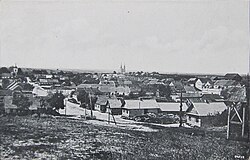
The Interbellum Period
During the interbellum—the period between the end of World War I and the start of World War II—Zelwa was administratively situated within the Wołkowysk County of the Białystok Voivodeship in Poland.
The town was characterized by a diverse ethnic and religious composition. According to a census conducted in 1921, the population consisted of 63.4% Jewish residents, 31.1% Polish residents, and 5.3% Belarusian residents.
World War II and the Holocaust
The stability of the interwar years ended in September 1939 with the joint German-Soviet invasion of Poland. Zelwa underwent two successive occupations. It was first controlled by the Soviet Union until July 1, 1941, and subsequently occupied by Nazi Germany until July 12, 1944. During the German occupation, the town was administered as part of Bezirk Bialystok, a separate administrative district.
The arrival of German forces brought immediate violence; between 40 and 50 Jewish men were killed upon their entry. The remaining Jewish population was forced into a ghetto, where they were held under extremely harsh conditions. This period of persecution culminated in November 1942, when the Jewish residents of Zelwa were deported to the Treblinka extermination camp, where they were murdered.
Key Facts
- Ownership: Transitioned from private nobility to the Polish Crown in the 16th century, then back to noble families (including the Sapieha and Radziwiłł) in the 17th century.
- Commerce: Weekly markets and annual fairs were established in 1720.
- Religion: A Piarist monastery was founded in 1739.
- Demographics (1921): 63.4% Jewish, 31.1% Polish, and 5.3% Belarusian.
- WWII Timeline: Soviet occupation (1939–1941), followed by Nazi German occupation (1941–1944).
- The Holocaust: Jewish residents were imprisoned in a ghetto before being deported to Treblinka in November 1942.
| Period/Event | Details |
|---|---|
| 16th Century | Became a possession of the Polish Crown |
| 1720 | Establishment of markets and fairs |
| 1739 | Foundation of Piarist monastery |
| 1921 Census | Majority Jewish population (63.4%) |
| 1939–1944 | Successive Soviet and Nazi German occupations |
| November 1942 | Deportation of Jews to Treblinka |
Frequently Asked Questions
Which noble families owned Zelwa in the 17th century?
The town was owned by several noble families, including the Sapieha, Połubiński, Radziwiłł, Jarmołowicz, and Konarzewski families.
What was the ethnic makeup of Zelwa in 1921?
According to the 1921 census, the population was 63.4% Jewish, 31.1% Polish, and 5.3% Belarusian.
When were the markets and fairs established in Zelwa?
Weekly markets and annual fairs were established in the town in 1720.
How was Zelwa administered during the Nazi German occupation?
Zelwa was administered as part of Bezirk Bialystok from July 1, 1941, until July 12, 1944.
What happened to the Jewish population of Zelwa during World War II?
After an initial massacre of 40 to 50 men, the Jewish population was imprisoned in a ghetto under harsh conditions before being deported to the Treblinka extermination camp in November 1942.