
Hydration Packs: Versatility in Outdoor and Tactical Use
Staying hydrated is critical during physical exertion, whether you are navigating a mountain trail or operating in a high-stress tactical environment. The hydration pack—a system consisting of a flexible water reservoir (or bladder) housed within a carrying pack—has revolutionized how people transport and consume fluids on the move.
Capacity and Design
The design of a hydration pack varies significantly based on its intended purpose. Minimalist packs are engineered for activities like running or cycling, where reducing weight and ensuring a secure fit are the primary goals. Conversely, packs designed for backpacking and extended hiking feature larger bladders to support longer durations in the wilderness.
Despite the availability of large packs, there is a practical limit to how much water a person can carry. Because water weighs 1 kilogram per litre (approximately 8.3 lb per US gallon), most reservoirs typically range between 1–3 L (0.26–0.79 US gal) to keep the load manageable.
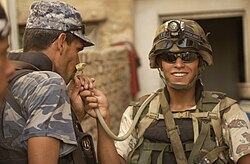
Diverse Applications of Water Reservoirs
While primarily used for drinking, water reservoirs serve several other practical functions. Some users employ them for showering or washing equipment and dishes. To achieve a stream powerful enough for cleaning, users may utilize pressurized hydration bladders or suspend a standard bladder from a height, such as a tree branch, to leverage gravity for water pressure.
These systems are staples in various outdoor recreational activities, including:
- n
- Hiking
- Bicycling
- Kayaking
- Military maneuvers
Because of their utility, most modern field backpacks designed for military or backcountry use include dedicated compartments to accommodate a user-supplied hydration bladder.
Specialized Tactical and CBRN Use
Hydration packs offer a critical advantage in CBRN (Chemical, Biological, Radiological, and Nuclear) protective situations. Because the systems are airtight, they can be integrated with full-face respirators. This allows personnel to maintain full mobility and receive fluids or nutrients without breaking the seal of their protective gear—a significant improvement over traditional canteens, which must be held upside down to drink.
For high-risk environments, specialized versions are available. These include acid- and chemical-resistant reservoirs, such as the Camelbak Chem-Bio, specifically designed for police and military operations.
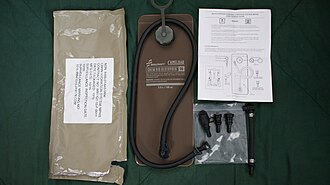
Key Facts
- n
- Standard Capacity: Most reservoirs hold between 1 and 3 liters.
- Weight Factor: Water weighs 1 kg per liter, limiting practical carry volumes.
- CBRN Advantage: Airtight designs allow drinking while wearing full-face respirators.
- Specialized Materials: Chem-Bio versions provide resistance to acids and chemicals.
- Versatility: Used for everything from athletic sports to military maneuvers and equipment cleaning.
| Feature | Recreational Packs | Tactical/CBRN Packs |
|---|---|---|
| Primary Goal | Weight reduction and comfort | Protection and survival |
| Typical Volume | 1–3 Liters | 1–3 Liters |
| Material Focus | Lightweight fabrics | Acid and chemical resistance |
| Integration | Standard backpacks | Full-face respirators |
Frequently Asked Questions
Why are hydration reservoirs usually limited to 3 liters?
Since water weighs 1 kilogram per litre (8.3 lb/US gal), carrying more than a few liters becomes impractical for most users due to the significant increase in weight.
How do hydration packs work with gas masks?
Because they are airtight, they can be connected to respirators via adapters, allowing the user to drink without exposing themselves to contaminated air.
Can hydration bladders be used for more than just drinking?
Yes, they can be used for washing dishes or showering, especially when pressurized or suspended from a height to create gravity-fed water pressure.
What is a Chem-Bio hydration system?
It is a specialized version of a hydration reservoir made from materials that are resistant to chemicals and acids, designed specifically for military and police use.
Which activities commonly use hydration packs?
They are widely used in hiking, bicycling, kayaking, and various military maneuvers.