
Lydia Becker and the Early Fight for Women's Suffrage
The journey toward gender equality in British politics was paved by determined pioneers who challenged the social and legal norms of the 19th century. Among the most influential of these figures was Lydia Becker, a strategist and organizer whose work in Manchester and beyond laid the groundwork for the women's suffrage movement in England.
Becker's activism was ignited in the autumn of 1866 during the annual meeting of the National Association for the Advancement of Social Science. It was here that she encountered a paper by Barbara Bodichon titled "Reasons for the Enfranchisement of Women," which sparked her lifelong dedication to securing the vote for women.
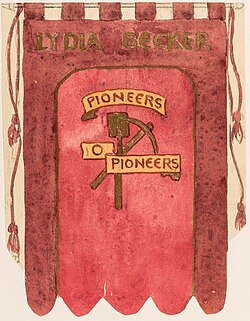
The Birth of Organized Suffrage in Manchester
In January 1867, Becker convened the first meeting of the Manchester Women's Suffrage Committee, establishing one of the first organizations of its kind in England. Through this committee, she connected with key allies, including Dr. Richard Pankhurst—known as "the red Doctor"—whom Becker admired for his extraordinary views on life and women's rights. Dr. Pankhurst would later marry Emmeline Pankhurst in 1879.
Becker was adept at using specific opportunities to generate public interest. When Lilly Maxwell, a widowed shop owner, mistakenly appeared on the Manchester voter register, Becker escorted her to the polling station. Because Maxwell's name was on the list, the returning officer allowed her to vote. Becker leveraged this event to encourage other female heads of households to petition for their inclusion on the rolls. Although these claims were later dismissed in the court case Chorlton v. Lings, argued by Sir John Coleridge and Richard Pankhurst, the effort brought significant attention to the cause.
Expanding the Movement and Public Influence
The movement gained further momentum on April 14, 1868, with the first public meeting of the National Society for Women's Suffrage at Manchester's Free Trade Hall. Presided over by Priscilla Bright McLaren, the event featured speakers Agnes Pochin, Anne Robinson, and Becker. During this meeting, Becker moved the pivotal resolution that women should be granted voting rights on the same terms as men.
Legislative Wins and Educational Leadership
Following the meeting, Becker embarked on a lecture tour of northern cities. Her efforts contributed to a major victory in June 1869, when women secured the right to vote in municipal elections (local government elections). Becker also campaigned for women's inclusion on school boards; in 1870, she became one of four women elected to the Manchester School Board, a position she held until her death.
The Power of the Press
In 1870, Becker and her friend Jessie Boucherett founded the Women's Suffrage Journal. This publication became the most popular suffrage periodical in 19th-century Britain, serving as a platform for speeches from across the country and publishing Becker's correspondence with both supporters and political opponents. Becker used the journal to hold officials accountable, such as when she publicly chastised the MP for Caernarvonshire for voting against women's suffrage.
Becker also organized speaking tours for women, which were rare in Britain at the time. One such event in 1874 introduced a fifteen-year-old Emmeline Pankhurst to the public suffrage movement.
Key Facts
- First Organization: Founded the Manchester Women's Suffrage Committee in January 1867.
- Municipal Success: Helped secure women's voting rights in municipal elections in June 1869.
- Media Influence: Co-founded the Women's Suffrage Journal in 1870.
- International Impact: Successfully campaigned for women's voting rights in the Isle of Man's House of Keys elections in March 1881.
- Leadership: Served as chair of the Central Committee of the National Society for Women's Suffrage.
Strategic Philosophy and Social Views
Lydia Becker's approach to feminism was distinct from many of her contemporaries. She rejected the idea of "essentialised femininity," arguing that there was no natural difference in intellect between men and women. This belief led her to advocate for a non-gendered education system in Britain.
Furthermore, Becker focused heavily on the rights of unmarried women. She argued that while married women often had stability through their husbands, widows and single women were in more desperate need of the vote to protect their own interests. This specific focus often made her a target of ridicule in editorial cartoons and newspaper commentary of the era.
| Year | Achievement/Event | Significance |
|---|---|---|
| 1867 | Manchester Women's Suffrage Committee | One of England's first suffrage organizations. |
| 1869 | Municipal Vote Victory | Women gained the right to vote in local elections. |
| 1870 | Women's Suffrage Journal | Created the era's most popular suffrage publication. |
| 1870 | Manchester School Board | One of the first four women elected to the board. |
| 1881 | Isle of Man Suffrage | Secured voting rights for women in the House of Keys. |
Frequently Asked Questions
Who was Lydia Becker?
Lydia Becker was a prominent 19th-century suffragist and organizer who founded the Manchester Women's Suffrage Committee and the Women's Suffrage Journal, playing a central role in the early movement for women's voting rights in Britain.
What was the significance of the Women's Suffrage Journal?
Founded in 1870 by Becker and Jessie Boucherett, it was the most popular publication regarding women's suffrage in 19th-century Britain, used to disseminate speeches and lobby political figures.
How did Becker's views on voting rights differ from other activists?
Becker argued more strongly for the voting rights of unmarried women and widows, believing they were more in need of political agency than women with husbands and stable incomes.
What was Becker's stance on education?
She believed there was no natural intellectual difference between men and women and therefore advocated for a non-gendered education system.
Did Lydia Becker achieve any legislative success?
Yes. She helped secure the vote for women in municipal elections in 1869 and successfully campaigned for women's voting rights in the Isle of Man's House of Keys elections in 1881.